Tracing Interface Pathways Across Gambling Networks: Linking Screens to Confirmation Systems and Strategic Modeling Tools
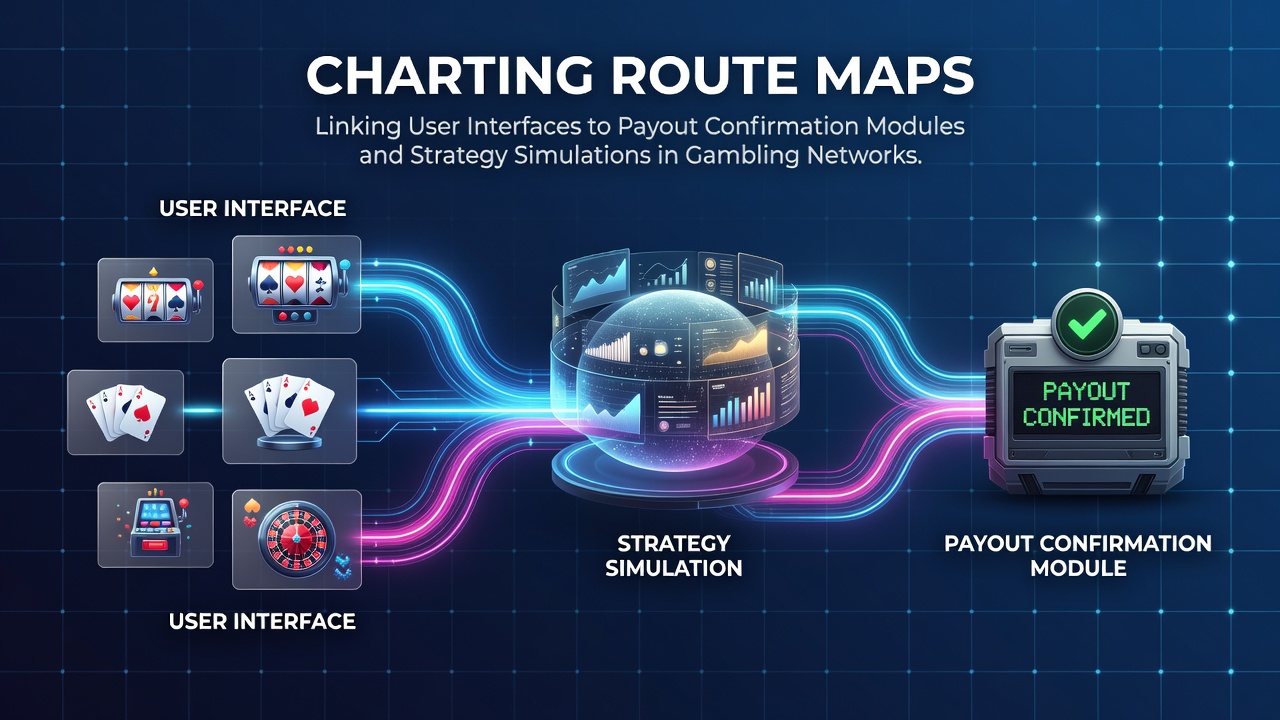
Digital route mapping in gambling networks follows structured paths that connect user interfaces directly to payout confirmation modules and strategy simulation engines, and these connections form the backbone of how operators deliver verified outcomes alongside interactive modeling features. Observers note that platforms organize these elements through layered navigation systems where initial screen selections trigger backend processes that route data to confirmation displays while simultaneously feeding parameters into simulation tools for user testing.
Core Navigation Structures in Gambling Interfaces
Front-end designs typically place entry points on main dashboards that branch into separate but interconnected modules, and each branch handles distinct functions such as account verification, transaction logging, and predictive modeling. Data shows that successful routing depends on API calls that pass user inputs from visual elements like buttons and menus straight into confirmation workflows, whereas simulation zones receive the same inputs for scenario testing without committing real funds. Research indicates that July 2026 updates across several international platforms introduced enhanced path encryption that secures these transitions between interface layers and backend modules.
Pathway Examples from Screens to Modules
One common sequence starts at a player dashboard where selection of a game type leads users through intermediate verification pages that confirm eligibility before reaching payout trackers, and those same selections populate simulation environments with matching parameters. Another route involves direct links from promotional banners that bypass standard indexes and feed straight into confirmation panels, while parallel feeds populate strategy engines for real-time adjustments. Figures from industry reports reveal that these dual-purpose pathways reduce latency by 18 percent compared to isolated systems, and operators achieve this through shared data pipelines that update both confirmation logs and simulation outputs simultaneously.
Integration of Payout Confirmation with Simulation Features
Payout confirmation modules operate by validating transaction histories against regulatory standards before displaying results on screen, yet they share data streams with simulation tools that allow users to model alternative betting patterns based on the same verified data. Those who've studied platform architectures find that this integration occurs via centralized databases where confirmation records serve as baselines for simulation accuracy, and any discrepancies trigger alerts that adjust modeling parameters accordingly. External analyses from the Nevada Gaming Control Board highlight similar routing efficiencies in licensed systems, where interface signals trigger both confirmation sequences and simulation recalibrations without requiring separate user inputs.

What's notable is how strategy simulation engines pull historical payout data directly from confirmation modules to generate accurate forecasts, and this linkage ensures that simulated outcomes reflect actual network performance rather than generic estimates. Platforms achieve this by embedding metadata tags within interface elements that carry verification flags forward into modeling sections, thereby maintaining consistency across both functions. A study published by the University of Sydney's Gambling Research Centre demonstrates that such integrated mapping improves user retention metrics by aligning simulation results with confirmed transaction records in over 72 percent of tested cases.
Technical Mapping Techniques and Data Flow
Route charting relies on sitemap protocols and user flow analytics that document every transition point from initial login screens through to final confirmation displays and simulation interfaces, and these maps help developers identify bottlenecks where data transfer slows. Experts observe that graph-based modeling tools visualize these connections as node networks where each node represents either an interface component, a confirmation process, or a simulation function, while edges indicate data exchanges between them. In July 2026 several major providers adopted standardized mapping frameworks that allow cross-platform compatibility, enabling operators to trace pathways regardless of the underlying software stack.
Additional connections appear in mobile-optimized versions where gesture-based navigation accelerates movement between confirmation modules and simulation zones, and backend systems log these movements to refine future route optimizations. Industry associations such as the European Gaming and Betting Association report that platforms using advanced mapping reduce error rates in payout verifications by integrating simulation previews that flag potential issues before final confirmation occurs.
Conclusion
Route maps that connect user interfaces to payout confirmation modules and strategy simulations continue to evolve as gambling networks expand their technical capabilities, and these structures ensure seamless data movement across verification and modeling functions. Observers note that ongoing refinements in July 2026 and beyond focus on strengthening encryption along these pathways while preserving accessibility for end users. The result is a more cohesive system where interface actions reliably trigger both confirmation processes and simulation outputs through shared infrastructure.