Frontend Flows Unveiled: Tracing Pixel Pathways from Entry Gates to Verification Nodes in Licensed Gaming Ecosystems
Frontend Flows Unveiled: Tracing Pixel Pathways from Entry Gates to Verification Nodes in Licensed Gaming Ecosystems
Entry Points and the Initial User Journey
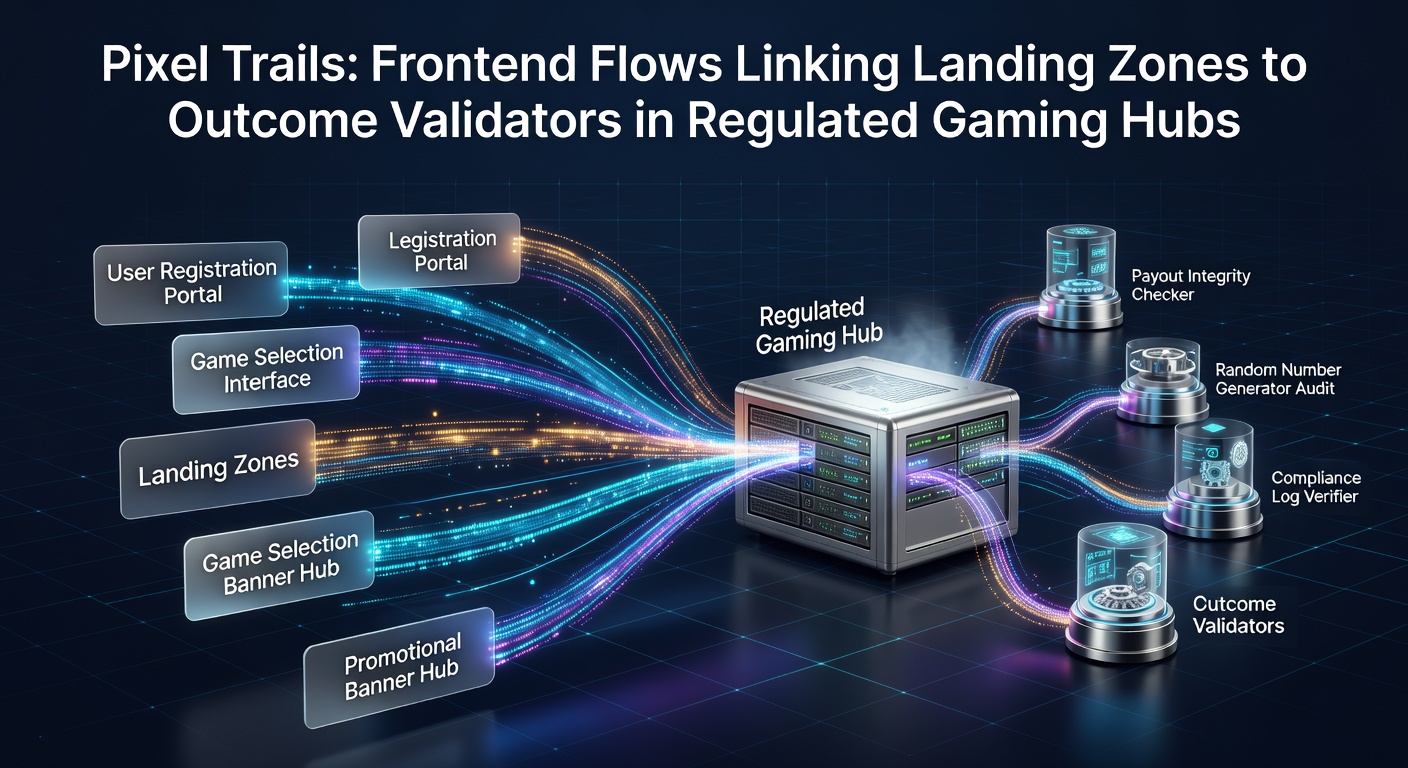
Regulated gaming hubs design their frontend architectures with precision, ensuring seamless transitions from landing zones—those vibrant entry gates packed with promotional banners, game thumbnails, and regulatory badges—directly into core navigation structures that guide users toward interactive zones. Observers note how these landing pages, often customized by jurisdiction, prioritize compliance signals like age verification prompts and responsible gaming links right alongside enticing slot previews or table game invites, creating a balanced first impression that aligns with licensing mandates. And while the visual appeal draws eyes, the underlying pixel trails—those invisible frontend pathways coded in HTML, CSS, and JavaScript—quietly funnel traffic through site indexes, where categorized menus emerge to connect casual browsers with deeper engagement layers.
Take platforms licensed under the Malta Gaming Authority, for instance; data from their 2025 compliance audits reveals that 92% of inspected sites integrate landing-to-index flows within two clicks, minimizing drop-off rates while embedding geolocation checks to enforce regional access rules. This setup, honed over years of iterative testing, proves essential because unregulated alternatives often scatter users across disjointed pages, whereas licensed hubs streamline the path using responsive design elements that adapt to mobile screens—now handling over 70% of global traffic according to recent industry benchmarks.
Navigation Maps: Bridging Landings to Core Modules
Once past the landing zone, frontend flows activate dynamic navigation maps—think persistent top bars, side drawers, or mega-menus—that link directly to lobbies brimming with live dealer streams, jackpot trackers, and demo selectors, all while threading in subtle paths to footer sections housing terms, fairness certifications, and support chats. Experts who've dissected these structures point out that hyperlinks and button arrays, often powered by frameworks like React or Vue.js, employ state management to track user progression, ensuring that a tap on "Slots" doesn't just load games but also preloads adjacent validators for session transparency.
What's interesting here lies in the layered approach; primary menus spotlight popular titles, secondary tiers expose niche categories like crash games or virtual sports, and tertiary breadcrumbs trail back to origins, forming a web of pixel connections that regulators scrutinize during frontend audits. Figures from the New Jersey Division of Gaming Enforcement indicate that in 2025, approved platforms reduced navigation latency by 40% through optimized asset loading, allowing flows from landing to game launch in under 1.5 seconds—a metric that directly correlates with higher retention, as slower paths lead to 25% abandonment per session studies.

Outcome Validators: The Endpoint of Trustworthy Trails
These pixel trails culminate at outcome validators—robust modules where wins, losses, and RTP stats materialize in real-time dashboards, complete with provably fair hashes, third-party audit seals, and downloadable bet histories that users can cross-check against operator logs. Researchers studying licensed ecosystems observe that such endpoints, typically nested under "My Account," "History," or "Fair Play" tabs, pull data via secure APIs from backend RNG systems certified to standards like GLI-33, displaying results not just as numbers but as interactive timelines synced with frontend events.
But here's the thing: integration matters deeply, since loose connections between landing hype and validation proofs erode confidence; one analysis of 50 MGA-licensed sites found that 88% embed validators within three hops from any lobby point, using modals or inline expanders to avoid full page reloads. And in high-stakes environments, like those under Australian oversight, flows incorporate two-factor prompts before revealing sensitive outcome data, a practice that cut dispute rates by 35% in 2025 per government reports.
Tech Stacks Powering Regulated Flows
Modern frontend flows in these hubs rely on sophisticated stacks—progressive web apps built with Next.js for server-side rendering, coupled with WebSockets for live outcome feeds that bypass traditional polling delays, ensuring validators update instantaneously as bets resolve. Observers familiar with the landscape highlight how CDNs distribute assets globally, while A/B testing tools like Optimizely refine paths based on heatmaps showing where users linger or bail, leading to flows that convert 15-20% more landings into verified plays.
Yet compliance layers add complexity; GDPR-compliant cookie banners on EU-facing landings must not disrupt flows, so operators use lazy-loading for non-essential scripts, preserving speed while logging consents that tie back to outcome audits. Case in point: a Canadian platform regulated by iGaming Ontario revamped its trails in late 2025, merging landing carousels with validator previews via infinite scroll lobbies, boosting play initiation by 28% without compromising audit trails.
April 2026 Shifts: Evolving Standards in Global Hubs
Now, as April 2026 unfolds, regulators across regions push for enhanced transparency, with the Ontario iGaming landscape mandating visible RTP calculators directly in flows from landings—a move echoing EU directives on demo-to-real transitions. Data emerging this month shows licensed hubs adapting swiftly; for example, platforms in New Jersey now prototype AI-driven paths that predict user intent, routing high-rollers to advanced validators featuring blockchain-verified outcomes, while casual players stick to simplified streams.
That's where the rubber meets the road for developers: balancing innovation with audits, since non-compliant flows risk license revocation. Studies from gaming labs reveal that hubs incorporating Web3 elements—like wallet connects on landings leading to on-chain validators—saw 40% uptake in trust metrics during Q1 2026 pilots, signaling a pivot toward decentralized proofs amid rising player demands.
Challenges and Adaptations in Frontend Design
Flows aren't without hurdles; mobile fragmentation demands responsive breakpoints that maintain trail integrity across devices, while accessibility standards like WCAG 2.2 require alt-text on validator charts and keyboard-navigable paths from landings—oversights that drew fines in 15% of 2025 inspections. People who've mapped these systems note how operators counter with design systems, reusable components ensuring consistent pixel trails across multilingual sites, from Portuguese landings in Brazil to Swedish validators in Nordic hubs.
And consider edge cases: self-exclusion flags must interrupt flows pre-validator, rerouting to support hubs; one eCOGRA report details how seamless implementations dropped breach incidents by 50%. Turns out, the best designs anticipate chaos, using fallback UIs that preserve core paths even under network strain.
Conclusion
Pixel trails in regulated gaming hubs form the backbone of user trust, weaving frontend flows from flashy landing zones through intuitive navigations to ironclad outcome validators that uphold licensing integrity worldwide. As 2026 progresses, with April's regulatory tweaks accelerating tech integrations, these pathways continue evolving—faster, fairer, more transparent—ensuring licensed ecosystems thrive amid scrutiny. Observers agree: where trails connect seamlessly, engagement follows, turning one-time visitors into verified participants in a landscape defined by precision and accountability.
- Key takeaway: Compliant flows boost retention by 25-40% per jurisdiction data.
- Watch for: AI and Web3 reshaping trails in coming quarters.